
Toggle menu
Get CoverageRequest Call Back

Transit Station Security Services in New Jersey

Transit stations are open public spaces that shift between commuter rushes, quieter daytime periods, and late-night service. GuardEX Security Services plans visible posts, platform and waiting-area patrols, staff support, reporting, and escalation around those changes.

GuardEX at a Glance

10+ Years

Providing professional security solutionsacross New Jersey for over a decade.

TOP RATED

Five-star feedback on review sitesincluding Google and Yelp.

Locally Embedded

Our ownership and management live here.We protect the communities we call home.

overview

Transit Station Security for Busy Public Spaces

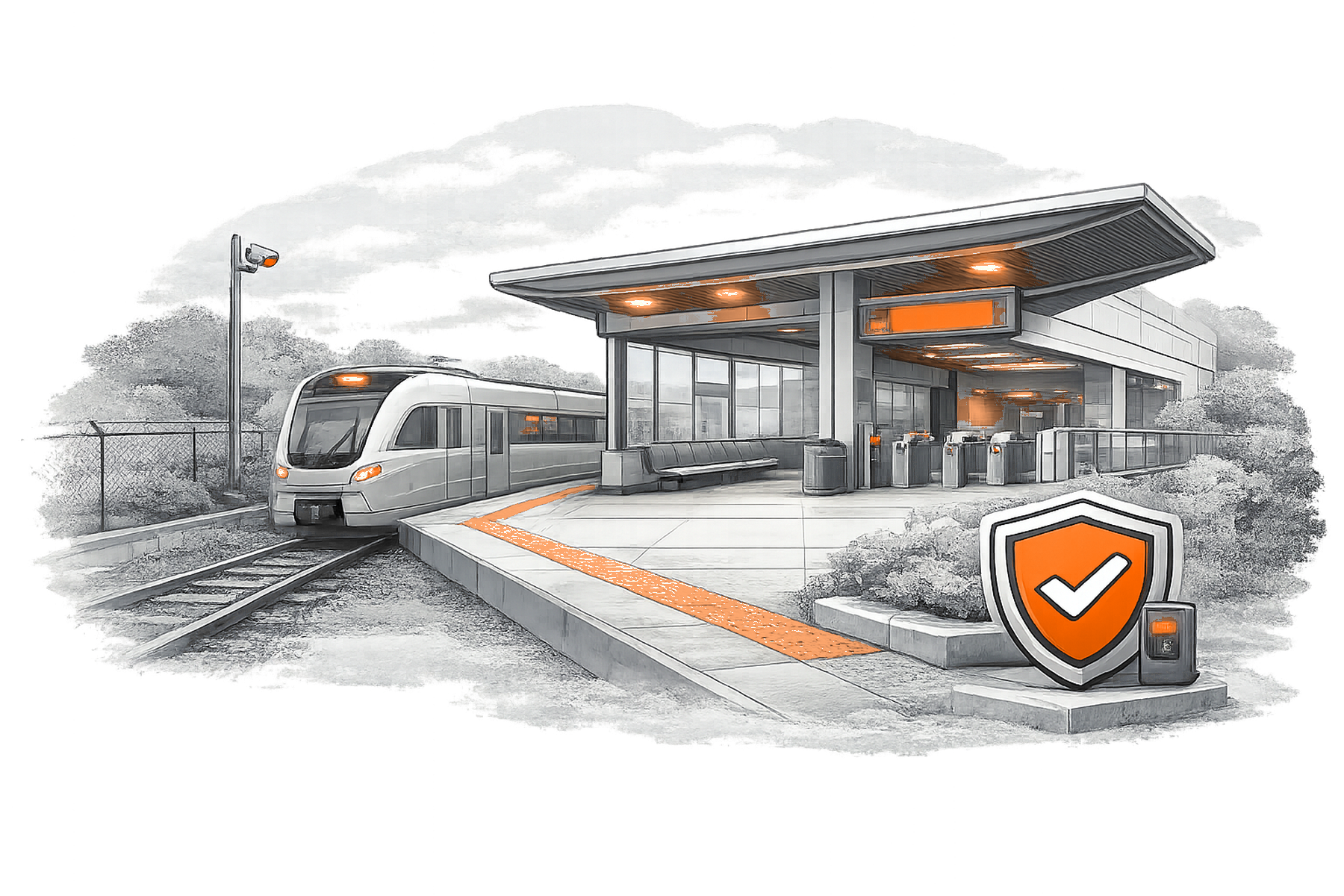
Passengers, employees, vendors, contractors, and service personnel use different parts of a station for different reasons. Entrances and platforms remain public, while offices, equipment rooms, service corridors, and other areas require controlled access.

GuardEX walks the station with management to identify the most useful public-facing post, approved patrol areas, late-hour concerns, staff-only access, camera or alarm duties, report requirements, and the contacts officers should use.

Officers can maintain a professional presence, assist staff, patrol assigned public and restricted-area approaches, document incidents, use de-escalation procedures, and call for help when needed. Fare enforcement, police authority, transit operations, passenger eligibility, and service decisions remain with authorized personnel.

Plan Transit Station Security Around the Passenger Day

Tell us where activity builds during commuter peaks, which areas need checks late at night, how staff-only access works, and who officers contact during an incident. GuardEX will define the post, patrols, reports, and escalation procedure.

services

Security Services for Transit Stations

Transit station security may use a visible officer during commuter peaks, late-hour patrols, or coverage at staff and service access points. Remote Security, access control, and CCTV can support the plan when public and nonpublic responsibilities are clearly separated.

Unarmed Security GuardsUnarmed officers can maintain a professional presence, support station staff, patrol assigned entrances, waiting areas, and platform approaches, follow restricted-area procedures, document incidents, and request police or emergency assistance as directed.Learn MoreArmed Security GuardsArmed coverage is not a default transit-station service. It may be considered only for a documented higher-risk post supported by the transit operator's policy, legal requirements, and a clearly defined authority and escalation plan.Learn MoreMobile Security PatrolsScheduled or randomized patrols can check station entrances, parking or drop-off approaches, waiting areas, service access, and other approved locations when a continuous post is not needed. Each visit follows named checkpoints and a written report standard.Learn MoreRemote SecurityOff-site video monitoring can watch authorized views of entrances, waiting areas, platform approaches, stairs, elevators, service corridors, and exterior access. Configured AI detection can support alerting, but every alert follows a documented verification, notification, and response procedure.Learn MoreAccess Control SystemsAccess control can organize credentials and entry procedures for employees, vendors, contractors, service personnel, offices, and equipment areas. It is intended for nonpublic access and does not replace ordinary passenger entry to public station areas.Learn MoreVideo Security SystemsOn-site CCTV can record entrances, waiting areas, platform approaches, stairs, elevators, service corridors, and exterior access for local viewing and incident review. Camera placement, privacy, retention, and optional AI detection are scoped to the station; Remote Security remains separate.Learn More

Challenges and Solutions for Transit Station Security

Transit stations must remain open and welcoming while handling commuter surges, late-night service, isolated platforms, staff-only rooms, and unpredictable public behavior. Theft, harassment, disorder, trespassing, and delayed incident reporting can affect passengers and employees when visible oversight is limited.

Transit Station Security Challenges

Transit stations may experience threatening or disruptive behavior, theft in crowded areas, isolated platforms and stairwells, unauthorized entry to staff spaces, unstaffed entrances, and medical or welfare incidents.

  • Threatening or disruptive behaviorArguments, harassment, intoxication, aggressive conduct, or refusal to leave closed areas can disrupt passengers and place station employees in difficult public-facing situations.
  • Theft in crowded waiting and fare areasRush-hour congestion can create opportunities for pickpocketing, bag theft, phone theft, and suspicious handling of unattended property.
  • Isolated platforms, stairs, and elevatorsLow-traffic periods can leave passengers and employees alone in stairwells, elevator lobbies, platform approaches, or remote station sections.
  • Unauthorized access to staff-only areasService corridors, offices, equipment rooms, track-access doors, and maintenance entrances may be reached from public areas or left unsecured during contractor work.
  • Unstaffed entrances and passenger confusionClosed gates, service changes, alternate entrances, or limited station staffing can cause passengers to wander into restricted areas or gather at the wrong access point.
  • Medical, welfare, or emergency incidentsPassengers may experience illness, injury, distress, or other emergencies where quick notification and a clear scene handoff are important.
How GuardEX Addresses Them

GuardEX provides visible public-area coverage, de-escalation support, high-traffic patrols, timed checks of low-visibility areas, restricted-door monitoring, passenger direction, and prompt emergency notification.

  • Visible presence and de-escalation supportOfficers maintain a calm presence, give clear lawful directions within the assignment, support station staff, request police or emergency assistance when needed, and document the incident.
  • High-traffic patrol and rapid reportingSecurity circulates through assigned entrances, waiting areas, and fare zones, remains alert to suspicious behavior, and quickly reports theft allegations or unattended items under station procedures.
  • Timed low-visibility-area patrolsDocumented rounds cover approved platforms, stairs, elevators, corridors, and exterior approaches, creating visibility and identifying persons or conditions that require follow-up.
  • Restricted-door and contractor monitoringOfficers observe assigned access points, verify employees or contractors under the operator's process, redirect unauthorized persons, and report propped or unsecured doors.
  • Entrance coverage and passenger directionGuardEX provides a visible point of contact, directs passengers to approved public routes using operator-provided information, and notifies station management about unresolved access or crowding issues.
  • Prompt emergency notification and scene supportOfficers contact the designated emergency resources, guide responders to the location, preserve access, relay observable facts, and remain within their assigned nonmedical role.
The GuardEX Planning Model

How GuardEX Builds a Security Plan That Works

Every service plan starts with the property, the daily routine, the people who use the site, and the response expected when something changes.

01

Understand the site

Identify access points, active hours, recurring concerns, patrol priorities, and the contacts officers may need.

02

Prepare the Officer

Brief officers on the post orders, access procedures, patrol route, communication standards, and reporting requirements.

03

Document the work

Use daily activity reports, incident reports, and guard-tour records to document the shift and identify follow-up.

04

Supervise and Support

Provide field supervision, prepare trained relief officers, and adjust the service when the property's needs change.

The result is a plan that officers can follow, supervisors can support, and management can evaluate through actual reports and patrol records.That's the GuardEX difference.

GuardEX In Action

Coverage That Moves with Passenger Peaks and Delays

Client Profile

A client managing a public transit station.

Security Challenge

Transit stations are public spaces shaped by fixed schedules and unpredictable disruptions. Rush-hour crowds, missed connections, delays, weather, parking, vendors, and late-night waiting can change the atmosphere quickly.

GuardEX Implementation Model

The plan follows passenger volume rather than treating every hour the same. GuardEX identifies the busiest entrance, waiting and pedestrian areas, parking approaches, service access, and the locations that need more attention during delays or late-night periods. Officer positioning and patrol timing change as the station becomes more or less crowded.

Key Actions

  • Emphasize entrances, waiting areas, pedestrian routes, and parking approaches during the busiest travel periods.
  • Use the operator’s approved process for employees, vendors, contractors, and service access.
  • Respond to behavior or safety concerns with calm communication and the designated transit or emergency contact path.
  • Document the location, passenger or property concern, actions taken, notifications made, and conditions requiring follow-up.

Client Goal / Benefit

Help passengers move through entrances, waiting areas, and connecting routes with greater confidence from the first arrival to the last departure.

Popular regions

Transit Station Security Coverage Across New Jersey

GuardEX Security Services provides transit station security across New Jersey for rail and bus stations, commuter facilities, park-and-ride properties, and related passenger locations. Coverage may include on-site officers, patrols, Remote Security, access control, or CCTV.

Questions answered

FAQs

What do transit station security officers typically do?
Officers may maintain a visible presence, assist station staff, patrol assigned public and restricted-area approaches, document incidents, use approved de-escalation procedures, and contact police or emergency services according to the post orders.
Can transit station security cover only commuter peaks or late-night hours?
Yes. Coverage can focus on morning or evening rush periods, late-night service, weekends, events, temporary concerns, or another defined window. The post, patrol route, and report requirements are confirmed before service begins.
Can a transit station use Remote Security and CCTV?
Yes. Remote Security provides off-site monitoring of authorized camera views, while on-site CCTV records and displays video at the station. Both services require clear privacy, alert, verification, notification, retention, and response procedures.
Do transit station security officers have police or fare-enforcement authority?
Not as part of a standard security post. Officers can provide visibility, staff support, patrols, documentation, de-escalation, and escalation. Police powers, fare enforcement, transit operations, and service decisions remain with authorized agencies and personnel.
View All FAQs

Resources & news

Recent Security Articles

SMALL BUSINESS SECURITY

Security Guard Services for Small Businesses in Englewood Cliffs, NJ

Practical security considerations for small businesses in Englewood Cliffs, including access, visibility, reporting, and after-hours coverage.

Read More
SECURITY TIPS

5 Things You Can Do to Secure Your Business's Perimeter

Five practical ways to strengthen gates, fencing, lighting, access points, and exterior visibility around a commercial property.

Read More
Get CoverageRequest Call Back