







Toggle menu
Get CoverageRequest Call Back

Superfund Site Security Services in New Jersey

Superfund sites can remain active through multiple investigation and cleanup phases, with changing contractors, restricted areas, and long periods of limited activity. GuardEX Security Services provides consistent access, patrol, reporting, and escalation procedures as the project changes.

GuardEX at a Glance

10+ Years

Providing professional security solutionsacross New Jersey for over a decade.

TOP RATED

Five-star feedback on review sitesincluding Google and Yelp.

Locally Embedded

Our ownership and management live here.We protect the communities we call home.

overview

Consistent Security Across Long-Term Superfund Work

A Superfund property may move between investigation, construction, treatment, monitoring, and quieter periods. Entrances, work zones, equipment, and authorized personnel can change from phase to phase.

GuardEX works with the designated site team to document the current gate, approval process, permitted patrol areas, temporary fencing, equipment or treatment locations, reporting requirements, and the contacts for routine and urgent issues.

Officers can verify authorized access, patrol approved areas, document visible conditions, and report concerns. They do not interpret cleanup plans, represent an agency, perform sampling or remediation, handle waste, or make environmental or regulatory decisions.

Keep Superfund Site Security Consistent Through Every Phase

Tell us the current project phase, active entrance, approved personnel process, patrol limits, equipment locations, schedule, and site contacts. GuardEX will build clear post orders that can be revised as the work moves forward.

services

Security Services for Superfund Sites in New Jersey

A Superfund site may need a fixed gate officer during active work, mobile patrols during monitoring or inactive periods, Remote Security, access control, CCTV, or a combination. The service plan should be reviewed at every major project transition.

Unarmed Security GuardsUnarmed officers can staff the active gate, verify personnel through the client's authorization process, patrol approved areas, maintain records, and follow the written escalation plan without taking on cleanup or agency responsibilities.Learn MoreArmed Security GuardsArmed coverage may be considered when a Superfund site has a documented concern such as repeated intrusion, valuable equipment, or a credible threat. The officer's authority is defined separately from technical cleanup and agency responsibilities.Learn MoreMobile Security PatrolsScheduled or randomized patrols can check gates, fencing, project trailers, treatment or equipment areas, building exteriors, and other approved points during monitoring or low-activity periods.Learn MoreRemote SecurityOff-site video monitoring can watch authorized entrances, temporary boundaries, project trailers, equipment or treatment areas, and approved exterior views. AI detection may support alerting, with verification and notification handled under the written plan.Learn MoreAccess Control SystemsAccess control can support credentials or entry records for approved project personnel. Officers follow the client's current authorization process and contact the designated representative when an approval is missing or unclear.Learn MoreVideo Security SystemsOn-site CCTV can record authorized entrances, trailers, equipment or treatment areas, fencing, and approved exterior views for local viewing and incident review. Camera retention, optional AI detection, and viewing duties are scoped separately from Remote Security.Learn More

Challenges and Solutions for Superfund Site Security

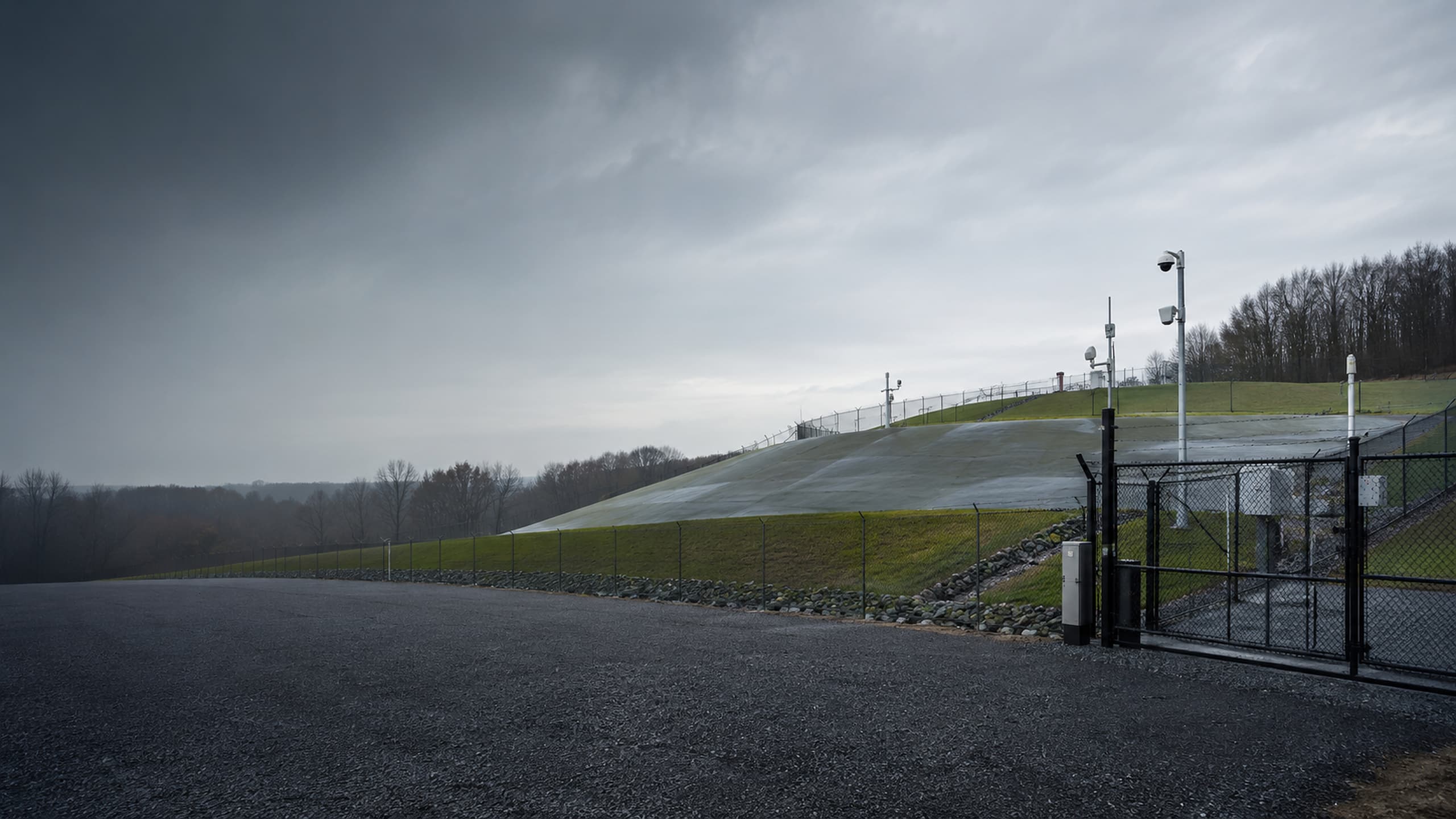
Superfund sites may remain active for years, moving between investigation, construction, treatment, and monitoring. Remote acreage, temporary fencing, valuable equipment, multiple contractors, and long quiet periods can attract trespassing, theft, vandalism, dumping, or unauthorized access as site conditions change.

Superfund Site Security Challenges

Superfund sites may face trespassing during inactive periods, theft or vandalism of treatment equipment, damaged temporary boundaries, unverified contractor traffic, illegal dumping or scavenging, and exposed access points as work zones move.

  • Trespassing during quiet project periodsMonitoring phases or gaps between work activities can leave large sections of the property unattended while buildings, excavations, or treatment systems remain restricted.
  • Theft or vandalism of treatment equipmentPumps, generators, electrical components, copper, fuel, tools, trailers, and monitoring equipment may be targeted when crews are off-site.
  • Damaged or shifted temporary boundariesConstruction traffic, weather, or project changes can leave temporary fencing, gates, barriers, and signage open, damaged, or misaligned.
  • Unverified contractors, inspectors, and haulersMultiple firms may use different schedules and approval channels, increasing the chance that an unlisted person or vehicle reaches an active work area.
  • Illegal dumping, scavenging, or material removalRemote access roads and inactive areas may attract unauthorized dumping, scrap scavenging, or attempts to remove materials from the property.
  • Changing entrances and work zonesExcavation, treatment, construction, or monitoring phases may relocate gates, trailers, equipment, and restricted areas, creating new access gaps.

How GuardEX Addresses Them

GuardEX addresses these risks with documented perimeter patrols, equipment-area checks, fence and gate inspections, contractor verification, monitored access roads, and phase-specific updates to post locations and routes.

  • Scheduled perimeter and access-point patrolsOfficers conduct documented checks of approved gates, fence lines, roads, and exterior approaches, then report or escalate unauthorized persons without entering restricted work zones.
  • Treatment and equipment-area checksGuardEX observes approved equipment and trailer exteriors, watches for tampering or unusual vehicle activity, and promptly notifies project contacts or police when required.
  • Documented fence and gate inspectionsPatrols identify breaches, open gates, damaged barriers, and lighting problems, with photographs or written documentation where authorized and immediate notification of urgent gaps.
  • Gate verification and project-contact confirmationSecurity checks client-provided approvals, confirms exceptions with the designated representative, logs arrivals and departures, and routes authorized vehicles to the correct entrance.
  • Monitored access roads and incident documentationOfficers watch assigned roads and perimeter approaches, challenge unauthorized activity from safe approved positions, and document vehicles, persons, and notifications for project management or authorities.
  • Phase-specific post and patrol updatesGuardEX aligns active posts and patrol routes with the current client-approved site plan so new entrances, closed areas, and equipment locations receive appropriate coverage.
The GuardEX Planning Model

How GuardEX Builds a Security Plan That Works

Every service plan starts with the property, the daily routine, the people who use the site, and the response expected when something changes.

01

Understand the site

Identify access points, active hours, recurring concerns, patrol priorities, and the contacts officers may need.

02

Prepare the Officer

Brief officers on the post orders, access procedures, patrol route, communication standards, and reporting requirements.

03

Document the work

Use daily activity reports, incident reports, and guard-tour records to document the shift and identify follow-up.

04

Supervise and Support

Provide field supervision, prepare trained relief officers, and adjust the service when the property's needs change.

The result is a plan that officers can follow, supervisors can support, and management can evaluate through actual reports and patrol records.That's the GuardEX difference.

GuardEX In Action

Long-Term Site Control Without Operational Drift

Client Profile

A client overseeing a long-term Superfund cleanup site.

Security Challenge

A Superfund site can move between intense fieldwork and long stretches of limited activity. Contractors change, treatment systems remain in place, and temporary controls can become permanent enough that small gaps are easily overlooked.

GuardEX Implementation Model

Long-term sites need more than a patrol route. GuardEX maintains a current security baseline—what should be open, closed, active, or inactive—then records changes against it. As contractors rotate or project phases slow down, updated post orders and reports help keep access rules and perimeter expectations from drifting.

Key Actions

  • Maintain a current map of entrances, restricted areas, long-term treatment assets, and areas no longer in use.
  • Update authorization and contact information as contractors and project leadership change.
  • Track recurring fence, dumping, trespass, lighting, or access-control issues over time.
  • Preserve clear shift and supervisor records so long-term conditions are not treated as isolated events.

Client Goal / Benefit

Maintain consistent site control through a cleanup that can last for years.

Popular regions

Superfund Site Security Coverage Across New Jersey

GuardEX Security Services provides Superfund site security throughout New Jersey for active cleanup areas, long-term treatment locations, monitoring sites, project trailers, equipment zones, and controlled perimeters. Coverage may include on-site guards, mobile patrols, Remote Security, access control, or CCTV.

Questions answered

FAQs

What is the security officer's role at a Superfund site?
Duties may include staffing the active entrance, verifying approved contractors or visitors, patrolling permitted exterior areas, checking gates and temporary fencing, documenting visible conditions, and notifying the designated site contact when an exception occurs.
Can the security plan change as the Superfund project moves into a new phase?
Yes. The post location, schedule, access process, patrol route, equipment checkpoints, restricted areas, reporting, and contact list can be revised for investigation, construction, treatment, monitoring, or inactive periods.
Can GuardEX provide patrols during long monitoring or inactive periods?
Yes. Depending on the property, scheduled mobile patrols, Remote Security, on-site CCTV, or a combination may cover gates, fencing, project trailers, equipment, and other approved checkpoints when daily activity is limited.
Do security officers represent an agency or perform cleanup work?
No. Officers support physical access, permitted patrols, observation, documentation, and notification. They do not speak for an agency, interpret cleanup decisions, perform sampling or remediation, handle waste, or make environmental or regulatory determinations.
View All FAQs

Resources & news

Recent Security Articles

SMALL BUSINESS SECURITY

Security Guard Services for Small Businesses in Englewood Cliffs, NJ

Practical security considerations for small businesses in Englewood Cliffs, including access, visibility, reporting, and after-hours coverage.

Read More
SECURITY TIPS

5 Things You Can Do to Secure Your Business's Perimeter

Five practical ways to strengthen gates, fencing, lighting, access points, and exterior visibility around a commercial property.

Read More
Get CoverageRequest Call Back