







Toggle menu
Get CoverageRequest Call Back

Petrochemical Facility Security Services in New Jersey

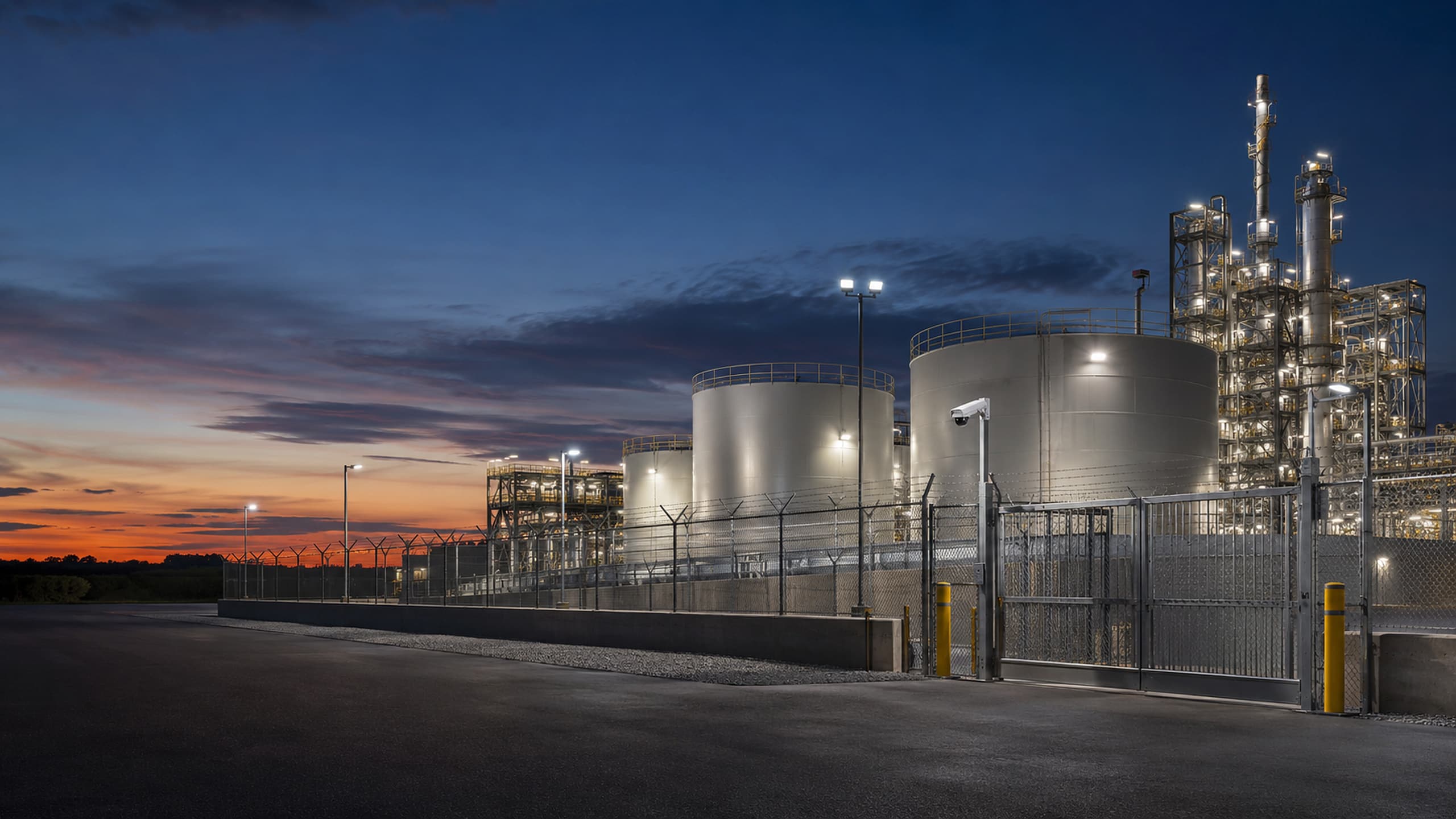
Petrochemical facilities combine controlled gates, contractor traffic, process and storage areas, service roads, and changing maintenance activity. GuardEX Security Services plans physical access, patrols, reporting, and escalation around the site's procedures without taking over operations.

GuardEX at a Glance

10+ Years

Providing professional security solutionsacross New Jersey for over a decade.

TOP RATED

Five-star feedback on review sitesincluding Google and Yelp.

Locally Embedded

Our ownership and management live here.We protect the communities we call home.

overview

Petrochemical Security Built Around Gate and Perimeter Control

A petrochemical property may need a staffed gatehouse, contractor and driver check-in, vehicle logging, service-road or perimeter patrols, and added coverage during turnarounds. The security role must be clearly separated from process, safety, and emergency-response work.

GuardEX reviews employee and contractor access, vehicle routes, loading approaches, restricted-area boundaries, service roads, fence lines, patrol checkpoints, local camera or alarm duties, reporting, and emergency contacts with facility management.

Officers follow the client's physical-security and notification procedures. Process operations, control-room work, material handling, maintenance, permits, safety and environmental compliance, firefighting, spill response, and hazardous-material response remain with qualified personnel and public agencies.

Put the Petrochemical Security Plan in Writing

Tell us how employees, contractors, drivers, and vendors enter, which routes and areas are restricted, when turnaround activity changes the schedule, and who must be notified. GuardEX will define the gate, patrol, reporting, and escalation duties before staffing.

services

Security Services for New Jersey Petrochemical Facilities

The service mix may include a fixed gate officer, perimeter patrols, Remote Security, access control, CCTV, or added coverage during turnarounds and maintenance periods. Every service is tied to a defined physical-security responsibility.

Unarmed Security GuardsUnarmed petrochemical security guards can staff gates, follow employee and contractor procedures, maintain approved vehicle or visitor logs, patrol assigned exterior areas, document activity, and use the written notification plan.Learn MoreArmed Security GuardsArmed coverage may be considered for documented threats, critical infrastructure, sensitive loading or storage areas, or other elevated risks. The need, authority, post orders, and escalation procedures are defined with the client before staffing.Learn MoreMobile Security PatrolsScheduled or randomized patrols can check gates, fence lines, service roads, parking, storage-area approaches, and other approved areas during low-activity periods or as a supplement to a fixed post.Learn MoreRemote SecurityOff-site video monitoring can watch authorized gates, perimeter zones, service roads, loading approaches, and exterior views. Configured AI detection can support alerting, but alerts follow a documented verification, notification, and response procedure.Learn MoreAccess Control SystemsAccess control can organize credentials for employees and approved contractors, visitors, vendors, drivers, and service personnel. Officers follow facility authorization and exception procedures rather than making operational approvals.Learn MoreVideo Security SystemsOn-site CCTV can record gates, perimeter zones, service roads, loading approaches, exterior doors, and approved storage-area views for local viewing and incident review. Camera placement, retention, and optional AI detection are scoped to the property; Remote Security is separate.Learn More

Challenges and Solutions for Petrochemical Facility Security

Petrochemical facilities can span tank farms, loading racks, service roads, contractor areas, carrier lanes, and multiple controlled entrances. High vehicle volume and remote exterior zones create opportunities for unauthorized access, theft, tampering, or delayed detection unless gate, yard, perimeter, and incident-response coverage remain coordinated.

Petrochemical Facility Security Challenges

Petrochemical properties may face credential sharing, gate tailgating, congested tanker and carrier traffic, theft or tampering near loading areas, service-road intrusion, changing turnaround access, and unknown vehicles or alarms after hours.

  • Credential sharing and gate tailgatingEmployees or contractors may follow another vehicle or person through an entry point, or attempt to use an outdated, borrowed, or unapproved credential.
  • Tanker and carrier congestion at loading areasMultiple carriers arriving together can block lanes, approach the wrong loading rack, or remain on the property without a confirmed appointment or destination.
  • Theft or tampering in yards and loading approachesTrailers, tools, cable, fuel, materials, and equipment positioned near loading or contractor areas may be exposed during quiet periods or shift transitions.
  • Remote perimeter and service-road intrusionLong fence lines, secondary gates, tank-farm approaches, and service roads can allow trespassers or unauthorized vehicles to move close to operational areas.
  • Turnaround crews and temporary access pointsShutdowns and major maintenance can introduce temporary gates, new contractors, extended hours, and revised routes that make normal access controls unreliable.
  • After-hours alarms or unknown vehiclesA door alarm, parked vehicle, perimeter alert, or suspicious approach may occur far from a staffed entrance when facility activity is limited.


How GuardEX Addresses Them

GuardEX addresses these concerns through one-entry-at-a-time gate oversight, carrier verification and staging, loading-area patrols, perimeter rounds, temporary checkpoint controls, and documented after-hours alarm or vehicle response.

  • One-entry-at-a-time gate oversightOfficers observe vehicle lanes and assigned pedestrian entries, verify credentials and access status, prevent unapproved follow-through, and document denied or questionable attempts.
  • Carrier verification and staging directionSecurity confirms the carrier and scheduled destination, coordinates with the authorized facility contact, directs drivers to approved staging, and records arrival or routing exceptions.
  • Loading-area and yard patrolsFocused rounds cover assigned loading approaches, trailer areas, contractor yards, equipment staging, and parking, documenting suspicious activity, damage, or unsecured conditions.
  • Perimeter and service-road patrolsCheckpoint-based patrols inspect approved fence lines, gates, roads, lighting, and exterior approaches, with breaches, damage, or unknown vehicles escalated immediately.
  • Temporary checkpoint and access-list controlsGuardEX staffs assigned temporary posts, follows current contractor and vehicle lists, verifies destinations, logs movement, and escalates outdated or conflicting instructions.
  • Documented alarm and vehicle responseSecurity responds within approved boundaries, observes from a safe position, contacts the designated facility or emergency representative, protects the scene, and records the full response.
The GuardEX Planning Model

How GuardEX Builds a Security Plan That Works

Every service plan starts with the property, the daily routine, the people who use the site, and the response expected when something changes.

01

Understand the site

Identify access points, active hours, recurring concerns, patrol priorities, and the contacts officers may need.

02

Prepare the Officer

Brief officers on the post orders, access procedures, patrol route, communication standards, and reporting requirements.

03

Document the work

Use daily activity reports, incident reports, and guard-tour records to document the shift and identify follow-up.

04

Supervise and Support

Provide field supervision, prepare trained relief officers, and adjust the service when the property's needs change.

The result is a plan that officers can follow, supervisors can support, and management can evaluate through actual reports and patrol records.That's the GuardEX difference.

GuardEX In Action

Scaling Security for a Turnaround Surge

Client Profile

A client operating a petrochemical facility.

Security Challenge

Petrochemical properties often combine a broad perimeter with tank farms, process units, service roads, contractor staging, and heavy vehicle movement. During a turnaround or outage, the number of people and temporary access decisions can rise quickly.

GuardEX Implementation Model

Turnaround security is built around temporary population and space. GuardEX separates regular plant access from short-term contractor credentials, identifies where tankers and equipment stage, and expands exterior coverage around newly active areas. Each shift receives the current temporary rules rather than relying on normal-operation assumptions.

Key Actions

  • Separate regular employees and vendors from turnaround contractors, specialized crews, and scheduled tanker or equipment arrivals.
  • Expand gate or staging coverage before the largest contractor arrival and departure windows.
  • Update patrol priorities around temporary parking, laydown, staging, and newly active exterior work areas.
  • Carry temporary credentials, access exceptions, open concerns, and changed contacts into every shift handoff.

Client Goal / Benefit

Maintain control across a large petrochemical property when a turnaround adds temporary crews, tankers, and staging to the normal plant routine.

Popular regions

Petrochemical Facility Security Coverage Across New Jersey

GuardEX Security Services provides petrochemical facility security throughout New Jersey for processing plants, storage terminals, tank and loading properties, industrial campuses, and related operations. Coverage may include gate officers, mobile patrols, Remote Security, access control, or CCTV.

Questions answered

FAQs

What do petrochemical facility security guards typically do?
Duties may include staffing a gatehouse, following employee and contractor procedures, maintaining approved vehicle or visitor logs, patrolling assigned perimeter and service-road areas, documenting unusual conditions, and using the written notification plan.
Can security coverage be adjusted for turnarounds and maintenance periods?
Yes. Coverage can be increased or rescheduled around turnarounds, shutdowns, maintenance windows, construction activity, extended contractor hours, temporary gates, or special deliveries, subject to the agreed scope and staffing availability.
Can GuardEX work with the facility's existing CCTV and access control?
Yes. GuardEX can incorporate the facility's existing gate controls, vehicle-access procedures, and on-site CCTV into the post orders. Officers may be assigned credential, log, or local camera duties, while off-site Remote Security is scoped separately with its own response plan.
Do security officers perform process, safety, spill-response, or hazardous-material duties?
No. Officers support physical access, patrols, observation, documentation, and notification. Process operations, material handling, maintenance, permits, safety and environmental compliance, firefighting, spill response, and hazardous-material response remain with qualified personnel and public agencies.
View All FAQs

Resources & news

Recent Security Articles

SMALL BUSINESS SECURITY

Security Guard Services for Small Businesses in Englewood Cliffs, NJ

Practical security considerations for small businesses in Englewood Cliffs, including access, visibility, reporting, and after-hours coverage.

Read More
SECURITY TIPS

5 Things You Can Do to Secure Your Business's Perimeter

Five practical ways to strengthen gates, fencing, lighting, access points, and exterior visibility around a commercial property.

Read More
Get CoverageRequest Call Back